|
Food in the Maldives
The resorts offer diverse international
cuisine including oriental, Middle Eastern,
Indian and continental ones. Most resorts
have more than one restaurant to cater
the needs. For light snacks and refreshments
the coffee shops in the resorts are ideal.
Generally the liveaboards feature set
menus while some may have restaurants
that offer ample choice.
The hotels and restaurants in Malé
serve the customers with western and eastern
specialities. Few of the guesthouses offer
food. The cafés in Malé
(locally known as hotaa) is an ideal place
to experience local tastes. Maldivian
food is spicy but milder than the food
found in some neighbouring countries.
Sweet, sour, hot and spicy food is found.
Hedhikaa is the short eats popular in
many cafés. Hot and spicy savouries
are made of smoked fish, grated coconut,
lime juice, onion and chilli. They include
bajiyaa (pastry stuffed with fish), kulhi
boakibaa (fishcake), keemia (fish rolls)
and gulha (fishballs) and masroshi (small
pancake stuffed with fish). The sweet
items are made from flour, sugar, and
essence. They include foniboakiba (cake
made of flour), githeyo boakiba (made
of flour, onions, and butter), and huni
hakuru folhi (made of grated coconut,
sugar and flour). A cup of black tea (kalhu
sai) is the usual option to wash down
the short eats.
The local cafés and restaurants
are usually open till 1.00 A.M. The opening
hours in the morning differ with some
cafés opening at even 5.00 A.M.
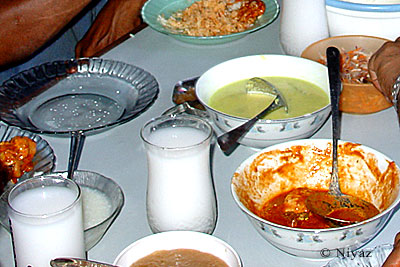
A traditional meal consists of rice and
garudhiya (fish soup), with fish, chilli,
lemon and onion. Curries are also used
instead of garudhiya. Fish paste known
as rihaakuru is also a fine side dish.
Alternately, roshi (chapati) and mas huni
(made of grated coconut, fish, lemon and
onions) are a popular dish. Fried yams
are also widely eaten. Sweet dishes include
custard, bodibaiy (rice mixed with sugar)
and fruits such as bananas, mangoes and
papayas. Watermelons are a favourite during
the fasting month of Ramazan.
Traditional dishes can still be found
in the local islands during Eid, Maloodh,
and other festivals and occasions such
as christening of a child, marking the
anniversary of a death. The traditional
dishes are now less common in the Maldives
as western items like bread, sandwiches,
margarine, jam, noodles and pasta are
introduced. Most of the resorts have special
nights called Maldivian Night serving
traditional local foods.
Alcoholic beverages and pork are prohibited
by Law and only found in tourist resorts
and liveaboards for tourist consumption.
|
Maldives food are
spicy and includes fresh fish |
»
Reaching Maldives
» Entry
and Custom Regulations »
Climate »
Language »
Currency »
Dress »
Transport
» Telecommunications
» Accommodations
» Food
» Shopping
|