|
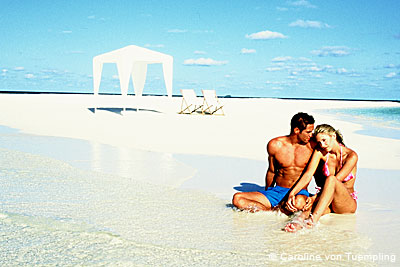
The spectacular beauty of these coral islands
made the Maldives one of the most popular
holiday destinations in the world. People
had visited these islands to trade with
the inhabitants and by chance when their
ships ran off course or were shipwrecked
in the shallow reefs of the Maldives.
The sheer natural beauty of the country
and the warm hospitality of her dwellers
captivated almost all of them.
|
A Maldive Resort
- tourism is the backbone of the
economy. |
From a very humble beginning in the 1970s
the tourism in the Maldives has evolved
and matured into an industry, which is
a key player of the domestic economy.
Tourism in the Maldives began in 1972
with 2 tourist resorts namely Kurumba
Village and Bandos Island Resort with
a bed capacity of 280. By 1987 the total
number of resorts increased to 57, while
their bed capacity rose to 6203 beds.
After 29 years of sustainable growth
in the industry the number of resorts
in 2000 stands at 87, having a total bed
capacity of more than 15,000 in resort
islands. There were more than 2500 beds
in other tourist accommodating facilities
such as hotels, guesthouses and safari
vessels. Today tourism contributes over
19% to the country's GDP, generating more
than 70% of foreign exchange earnings
and more than 40% of government revenues.
The number of in-bound tourists to the
country increased tremendously from 1097
tourist in 1972 to 395,725 in 1998.
Each resort is located on an island with
self contained facilities such as power
plants, cold rooms, desalination plants,
sewage and waste disposal systems, staff
quarters, transport services and diving
facilities etc. Each resort is designed
differently and every island is unique
despite the typical tropical environment
of the Maldives. Guestrooms are generally
built in single story though very few
resorts have two story rooms. Most of
them have thatched roofs and are built
of corals and bricks.
|